Monday, February 6, 2017

Moving to Mexico…The Immigration process made easy!

My last post dealt with determining what type of Mexican visa or permit you should apply for. Now that you have made that decision, this post will help you with the process of applying for and getting that visa or permit. If you have not read my other post, please visit “Moving to Mexico…WhichVisa is right for you?” before you begin.

The Residency Visa process starts at a Mexican Consulate in the US. While the process is very similar wherever you apply, each office seems to have some leeway as to what they require for documentation and financial requirements. To begin the process, first call or email the office you will be using to make an appointment and to verify what you need to bring. We worked with the Consulate in Sacramento. We called and got voice mail, left a message and also sent an email. They promptly called us back and politely answered all our questions. Your actual experience may vary depending on the office and the individual you are dealing with!

As of this writing, to apply for either a Temporary or Permanent Residency you will need the following:

  • A valid passport and copy of the main page.
  • 1 color photo passport size, front view, no eyeglasses on white background
  • $36 in cash for filing regardless if you are approved or not
  • Visa application form (can be printed from the web and filled out ahead of time, or done at the consulate office)
  • Any other documents required by the type of visa you are applying for. (Be sure to verify with the consulate where you are going since some may require slightly different  documents)
*

Upon arrival at the Mexican consulate they will conduct a short interview, and look over all your documents to make sure you have what they are requesting.  If all the documents are in order, they will begin to process them and you will have to wait during this time. Depending on your circumstances, it is possible you may be asked to conduct a second personal interview with the Consular as well (we did not).  Once all the documents have been approved, they will take your photo and fingerprints.  When this is done they will issue and attach the visa into your passport.  From what we have read, we were very fortunate and the entire process took a little over four hours and our passports were ready the same day. However we have read about people who had to go back another day to pick everything up, so be prepared for a return trip.

Once you receive the visa in your passport you have 180 days to enter Mexico. After   you enter Mexico you then need to start the final immigration process within 30 days. When you arrive in Mexico make sure that the immigration form you fill out is marked by the immigration official as valid for 30 days (residency). Please note: Once you have entered Mexico, and while they are processing the final paperwork for your “card” you can not leave Mexico without special permission which may be difficult to obtain. This usually takes 6-8 weeks so be sure to plan for it. 

The final immigration process will take place at the Immigration Office. Here you will pay the actual fee for the visa (check for current fees), however they will not accept the payment from you at the office. You (or your facilitator if you use one) will need to go to a nearby bank. As all the paperwork etc is in Spanish and the Immigration officials will most probably not speak English, the easiest way to complete this process is to hire a facilitator. If there is an expat community in your area you can usually find one easily. In San Miguel de Allende we hired Patty Garcia and she handled everything. We met her at an office across the street from Immigration, she asked some questions, filled out the forms, had us sign them, and took the additional photos needed.  We then paid her for her services (Approx $40 USD) and the payment for the visa which she took to the bank and deposited to immigration. She then presented everything to the immigration office on our behalf.  Once they had approved the applications (about 4 weeks) she contacted us to meet her at the Immigration office to sign the final documents and take fingerprints.  Approximately 2 weeks later we met with Patty again and picked up our cards. While you can do everything yourself, Patty made the entire process about as painless as possible, and unless you speak fluent Spanish, I highly recommend the use of a facilitator.

*Note:  If you are going in as a married couple and want to have them look at combined documents you will need to bring your certified marriage certificate.  You may need an apostille on the document from the Secretary of State in the state where you were married. 


Sunday, February 5, 2017

Moving to Mexico..Which Visa is right for you?

As we prepared for our move to Mexico, the first question to answer was what type of visa or permit to apply for. Having read numerous horror stories about the trials and tribulations associated with this process, we wanted to make sure we both made the right choice the first time, and made the process as painless as possible. Having now waded through the entire process from beginning to end, I will attempt to put together a guide to help simplify the process for those of you who may wish to follow us! I will start with the types of visas and permits that are available so that you may decide how to proceed.

There are two types of visas and one type of travel permit available to US Citizens who wish to either travel or reside in Mexico. The immigration process was significantly revised in 2013, so some of the information you will find online may be outdated. The information I am providing is current as of January 2017, but should be confirmed prior to making application, as requirements can vary from one Consulate office to another, and are sometimes subject to change without notice! No matter which type of visa or permit you apply for, you will need a current Passport or Passport Card.

The first and most painless type of permit is issued to tourists entering the country for stays of 180 days or less. These tourist permits are usually included in the price of your airfare, and you simply fill out the form on the plane if available, or at Customs when you arrive. (If you are entering the country by automobile, you will need to get your tourist permit at the border crossing. I suggest you check online for the latest instructions). As this post will deal primarily with applying for residency visas, I will not elaborate on tourist permit, but needless to say they are easy to obtain but are only good for 180 days. However, many people who reside in Mexico part time, some of them who have been doing so for many years, rely on the tourist permit as a simple way to gain entry to the country. If they are not planning to stay more than 180 days anyway, this can work well for them. In addition, if you do wish to stay for longer periods but do not want to apply for a Temporary or Permanent visa, generally, all that is required to renew the tourist permit is to simply leave the country and then reenter on a new permit. This can be done at a border crossing or by flying back to the US and returning. As many people will be returning home periodically anyway, this is often not an inconvenience. Be aware however that this method is one that could be subject to restrictions at any time, so make sure you pay attention to the current rules and do not overstay your permit!

Next, you may wish to apply for a Temporary Residency Visa. This works well for people who are perhaps still testing the waters as to living full time in Mexico, or who may not qualify financially as a Permanent resident. Both types of visas have nearly the same application process, but different financial requirements. Temporary visas are issued for periods of one year, and can be renewed without leaving the country for up to four years. At that time, you must decide to either apply for a Permanent visa, or return to the US. The main disadvantage to this type of visa is you will have to reapply each year, and pay a higher fee over the four year period than you would for a Permanent visa. If you qualify, and believe that you will be living in Mexico on a full time basis permanently, you may wish to do as we did and apply for a Permanent visa immediately.

When applying for either Temporary Residency or Permanent Residency you will need the following:

The requirements for a Temporary Residency Visa as of this writing are as follows:

You will need to provide Proof of Solvency. There are two ways you can do this:

Investments (401K, Retirement accounts, etc.) or bank accounts equal to 5,000 times the current daily minimum wage in Mexico City.  Current 2017 rate is 80.04 MXN per day. This is adjusted annually by the Government. At the current exchange rate, this amounts to approximately $20,000 USD, but will fluctuate depending on the Government set minimum wage, current exchange rates and individual Consulate requirements.
 * 
**
***

You will need to provide two copies (one must be an original provided by your bank or investment company) showing a monthly balance equal to or greater than the requirements for the last 12 months.

OR

One original and a copy of documents showing a Pension and/or Social Security income with a monthly amount free of liens amounting to 300 times the current daily minimum wage for the previous six months. At the 2017 rates this is approximately $1200 USD monthly.
**
***

*Note-Each consulate office has leeway and may have different requirements. Check with your local Consulate before you apply.
**Note-You are not allowed to work in Mexico on a Temporary Visa without a work permit.
***Note-You are allowed to drive a US licensed vehicle in Mexico on a Temporary Visa with the proper permits

Finally, if you can qualify, you may apply for a Permanent visa. Generally speaking, a Permanent Residency Visa is only available to applicants that qualify as retired or are making a substantial business investment in Mexico. The Consulate may require further documentation of your retirement status. This type of visa allows you to reside in Mexico full-time without major restrictions, and grants you most of the rights and benefits of a Mexican citizen other than the right to vote. These rights and benefits include access to low-cost health care and senior discounts on a variety of services.  This type of visa has the strictest financial requirements and is most frequently used by those who are retiring. It is relatively easy to figure out if you will qualify, and if you believe you will be moving to Mexico on a full-time basis permanently, this type of visa will probably make the most sense. Once you have received it, you will not need to deal with immigration again other then to notify them of your new address in the case of a move. You will also be issued a card that will allow you to enter the country without going through the more stringent customs and entry procedures a tourist will encounter. As most of you reading this are probably looking at retiring in Mexico, most of this information is related to retirement. For more information on other qualifying circumstances, please read this guide.

The requirements for a Permanent Residency Visa as of this writing are as follows:

You will need to provide Proof of Solvency. There are two ways you can do this.

Investments (401K, Retirement accounts, etc.) or bank accounts equal to 20,000 times the current daily minimum wage in Mexico City.  Current 2017 rate is 80.04 MXN per day. This is adjusted annually by the Government. At the current exchange rate, this amounts to approximately $80,000 USD, but will fluctuate depending on the Government set minimum wage, current exchange rates, and individual Consulate requirements.
 * 
**
You will need to provide two copies (one must be an original provided by your bank or investment company) showing a monthly balance equal to or greater than the requirements for the last 12 months.

OR

One original and a copy of documents showing a Pension and/or Social Security income with a monthly amount free of liens amounting to 500 times the current daily minimum wage for the previous six months. At the 2017 rates this is approximately $2000 USD monthly.
**

*Note-Each consulate office has leeway and may have different requirements. Check with your local Consulate before you apply.
**Note-You are not allowed to drive a US licensed vehicle on a Permanent Visa without first nationalizing the car. This is costly, and not all vehicles will qualify.


By reviewing the types of visas and their requirements, you should be able to determine the visa that will work best for you. Once you have decided on what you will apply for, it is time to begin the application process. In my next post, I will discuss the entire process and how to avoid the pitfalls and delays that some people have experienced.

Wednesday, February 1, 2017

A Housewarming Party for the Guerrero Family, and the Special Gift of La Mesa!

We have been doing some volunteer work for Casita Linda, a non-profit organization that builds homes for local families. We were recently invited to attend a housewarming party for the Guerrero family hosted by the organization at a new bright blue house situated on a hill overlooking San Miguel. Along with a number of members of the board and a few other volunteers, we arrived by carpool and were greeted by the matriarch of the family, a shy smiling woman named Guadalupe and her three beautiful children, Caren, Ariana, and Juan Diego. 

A number of other children, dogs, and adults from the neighborhood joined the festivities as well. Jose, the man of the house and a deeply religious man who I had met on a previous visit, was not able to attend as he was involved with an important religious event taking place that weekend.

Upon arrival, the first order of business was to unload some furniture that had been made for the house by the students at the San Miguel School for Special Education. The school works primarily with the deaf, but also assists students with other disabilities. The students have been building furniture for the Casita Linda homes and it is a special relationship that gives the students’ purpose and the families a better life. Today we were delivering a table and two benches, along with a small bookcase. It is hard to imagine the joy that a table and a place to sit can bring until you see it with your own eyes. As we carried the table in and set up the benches, the family quickly gathered around and smiles broke out everywhere. It is easy to take for granted that your family has a place to gather and a place to sit. Family and food are very important to the Mexican people and the table or la mesa is an important place to celebrate it.

Along with desserts that some of us had brought, the neighbors soon arrived bearing exquisite bowls of a delicious chicken and rice dish, and we were all treated to the first meal at the new table. 


The children (and some of the adults!) seemed more interested in the cake that we brought, but hey, it’s a fiesta! 


After a cute ribbon cutting ceremony, we bid the family farewell and let them go back to their lives in a safe, dry, and comfortable new house. Thanks to everyone at Casita Linda and the San Miguel School for Special Education for their tireless work and the opportunity to share this special occasion with the Guerrero family!

Click on any picture to view the gallery!

Tuesday, January 31, 2017

Buying Real Estate in Mexico...Our New Home in Mineral de Pozos!

After over a little more than a month and a half, we finally signed the papers on what will be our new home in the town of Mineral de Pozos! Buying real estate in Mexico is a bit different than in the US, and needless to say, it has been a learning experience. We were lucky in a number of ways however, and even though there have been delays, overall things went fairly smoothly. First, the realtors we worked with (I use this term loosely, pretty much anybody can sell real estate in Mexico, and there is no real licensing or training involved, although there is some organizations springing up that are attempting to bring some order to the chaos!) turned out to be a real gem, and we felt comfortable and safe with them throughout the entire transaction. Hector and his daughter Rebeca work as a team as Hector does not speak English while Rebeca does. Hector has a strong background in banking and business, and is very good at navigating the paperwork and government bureaucracy one must deal with here. Rebeca acted as our translator and she is a cheerful and delightful person to work with.

When we originally started shopping for a house, we were looking at homes in San Miguel, but after a couple of trips to Pozos, we fell in love with the town and changed our focus to homes there. Once a mighty mining town with nearly 90,000 residents, Pozos is now a small town of around 4000 people, of which only a handful are gringos. At any given time, there are only a small number of homes available, and we were only able to look at a handful of properties as we began our search. Weirdly enough, the first house we looked at, and ultimately made an offer on, turned out to be owned by a very close friend of a very close friend! Although the two of us shared a number of mutual friends, we never got to know each other, but getting a strong thumbs up on his character from several of my friends gave us a lot of confidence in working with him. As it turns out, he is a pleasure to know, and we too have now become friends.

 Although the final closing is still being delayed by some technical difficulties that I will not bother to get into here, we hope to begin doing some needed repairs, clean-up, and a fresh coat of paint to the house in preparation for moving in later this summer. Long-term plans call for the addition of a second living quarters for us that will allow us to use the original casita as an Airbnb or guest quarters.


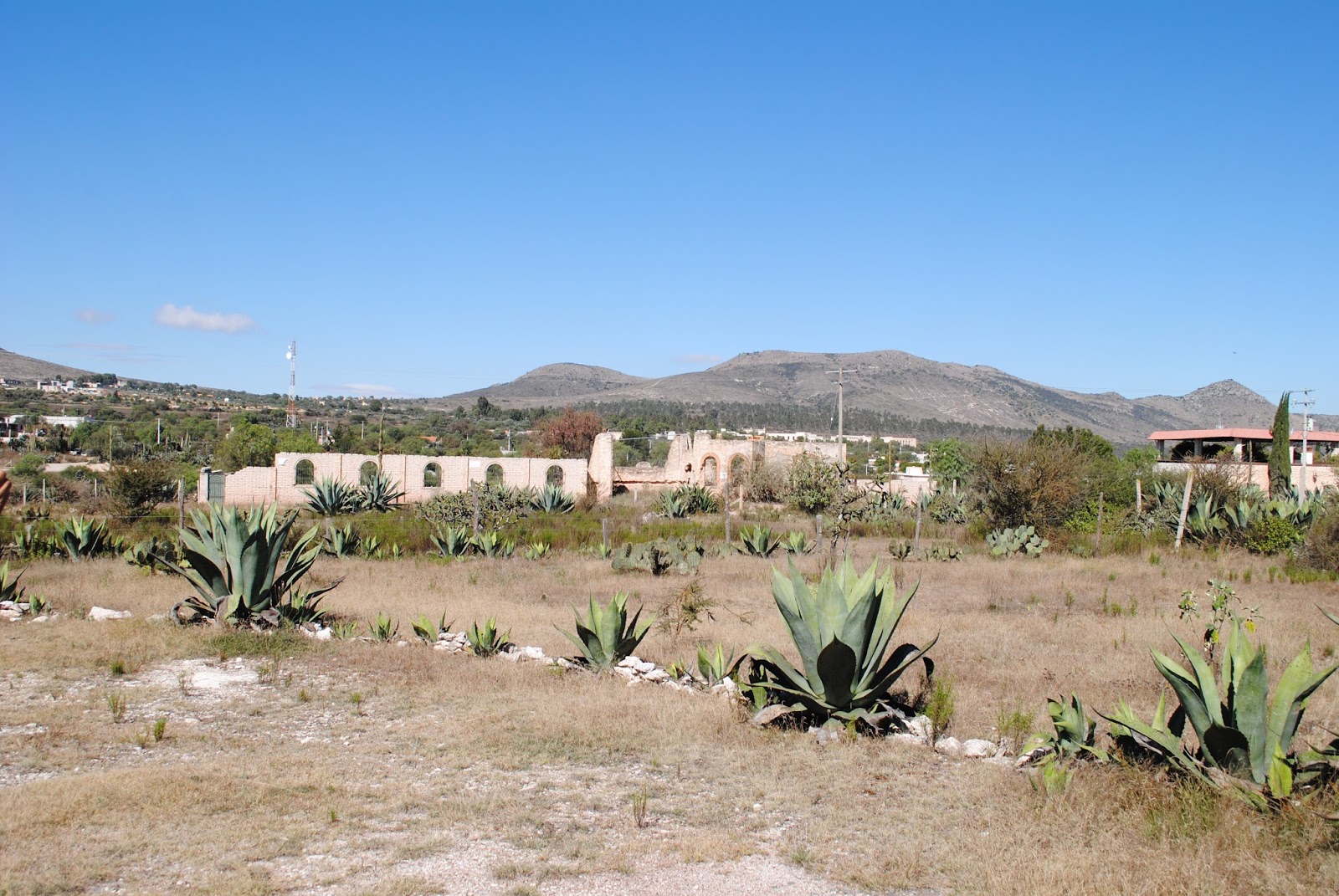
The house itself sits on a large half-acre lot dotted with cactus and other high desert vegetation, and has a commanding view of the nearby mountains. In addition to the casita, there is a walled compound that is just waiting for a large garden area and the addition of the new living quarters. Although the pictures make the house appear to be out of town, it is right on the edge, and the main square and shops are just a short walk away. The town of Pozos has been named a “Pueblo Magico”, a designation that brings both private and government funds to the area, and is helping to revive the town while preserving its historic character. As Kate put it, "San Miguel captured our heart, but Mineral de Pozos captured our soul". We are very excited about the move and hope we will see you here!

Friday, January 27, 2017

Driving in Mexico. Rapunzel, Rapunzel, Let down your... license plate?

Like most adventures in Mexico, yesterdays began with something a little humorous. I had arranged to borrow a friend’s car for the day to take some visitors to the nearby (about 50 minutes) town of Mineral de Pozos. This is a small colonial mining town that we have fallen in love with and are actually in the process of buying a house. More on that soon!  At any rate, the evening before I was supposed to pick up the car from the garage where it is stored, he called to let me know there was a slight problem. 

As we had found out earlier from our observations, when you get a parking ticket in San Miguel, the local traffic police remove your front license plate. This is pretty clever. It insures that you will pay your parking fines and get your license plate back as it is obvious that a car without a front plate has an unpaid fine! Driving around without a plate makes you a target for further harassment and is not recommended. It seems my friend had paid his fine and retrieved his plate, but had neglected to install it, so we had arranged to pick up the plate prior to leaving town.

Through the shop
The only catch was our friend was leaving town before we could come by, and we needed to get with his maid to pick it up. Simple enough it would seem, except in order to get to his apartment, one must go through a small curio shop that caters to tourists, but does not open until after we wanted to leave. “No problema” he exclaimed! “There is a door bell switch on the window frame of the first floor window directly under my balcony. Ring the bell and my maid will get the plate down to you. “Perfecto” I replied and finished planning for the day ahead.


The next morning was a beautiful day, and we met our traveling companions for breakfast at one of our local haunts. After a delightful and leisurely breakfast, we wandered down the cobblestone streets to my friends’ humble abode.


The switch
I found the switch for the bell crudely wired to the frame of the window and gave it a push. Very shortly the balcony door  opened and out popped a smiling Mexican woman clutching a small basket attached to a rope.

She quickly lowered this over the edge and in just a few moments I had retrieved the front license from the basket, given a big smile and a gracias to the helpful maid, and was headed off to the garage.


Luckily, I had remembered to bring a screwdriver, and was able to throw the front plate back on the car. I was just a little nervous, as this was not only the first time I had driven a car in five months, it was the first time I had driven in Mexico in many, many years and driving in Mexico can be a bit like recreating the Speeder Bike Chase in Star Wars. 


The roads can be narrow and rough, the traffic moves at a variety of speeds, farm animals appear out of nowhere, the Mexican speed bumps or “topes” seem to pop out of the pavement without warning and threaten to brutally tear the suspension out from under your car, turn signals are used as a warning for seemingly unrelated behavior, and passing is both a sport and a national pastime! Vigilance is a must at all times.  Somehow I managed to settle in to the drive, enjoy the scenery, and arrive safely at our destination without incurring the notice of the PolicĂ­a!


Next up…Our new home in Mineral de Pozos!

Click on any photo to visit the gallery!


Wednesday, January 4, 2017

Casita Linda-Building Hope One House at a Time!

One of our goals upon arriving in Mexico was to devote some of our time to volunteer work. On our previous visit to San Miguel, we became aware of the non-profit organization Casita Linda. The group was founded in 2001 and does the honorable work of building homes for local residents at no cost to the family. This past weekend, we had the unique experience of visiting a few of these homes and the privilege of meeting the families as a way to become familiar with the scope of the project.

Photo courtesy of Casita Linda
Our guide and Casita Linda treasurer Gregg Blackburn, a retired attorney from Boston, picked us up at La Comer, a large modern department store located on the edge of town. Much to our surprise, we left the parking lot, turned down a side road maybe a quarter mile away, and entered a different world. The new highway we had just left turned to a rough dirt road, and we realized the row of businesses along its edge was hiding a landscape of tin shacks, unfinished brick buildings, scroungy dogs, feral cats, and some obviously poor people. Scattered among this however were a smattering of brightly colored homes, obviously of better construction, and clearly more well maintained. Like a beacon of hope, these homes shone above the rest, and the purpose of Casita Linda which means “pretty little house” became abundantly clear.

To qualify, the family must first meet a set of criteria established by Casita Linda to help insure that the family will take full responsibility and ownership of the home when it is completed. Interestingly, the first criteria is they must own the land on which the house will sit. The history of land reform in Mexico is complicated and stretches out over hundreds of years and many forms of government, but the bottom line is many indigenous people here own their land. The problem however is they are too poor to build a home, and many end up living in poorly constructed lean to sheds or ramshackle homes built with whatever materials they can scrounge. These buildings provide little comfort or protection from the weather, and the dirt floors often become a sea of mud during the rainy season. Mothers cook meals on open fires, the family sleeps on whatever they can find, and the children are often cold and have no place to study.  Life in general is pretty tough.

Other qualifying criteria include:

Provide proof that any school-age children living in the house are attending school regularly
   and receiving satisfactory grades
Provide a drug-free environment with no abuse of alchhol or history of domestic violence
Agree to work on the construction of their home and the one built before or after theirs
Be employed or actively searching for work

After a thorough study of the potential families, Casita Linda’s Family Selection Committee writes a recommendation and submits it to the Board of Directors for a vote.  Once qualified, volunteers work with the family to configure the home for their needs, and construction is scheduled. The homes cost approximately $8000 USD to construct and generally include water storage, a small septic pool, and basic solar lighting as most of the homes do not have access to city services.

The first home we visited was occupied by a charming family whose matron Grisela herded a troop of small children around the house as we toured the property. Due to its proximity to town and the pleasant demeanor of the family, Grisela’s home is frequently used for visits, and the entire family was very welcoming. Grisela works at the brickyard for Casita Linda located next to her property. Working tirelessly, the crews crank out thousands of handmade bricks, mixing the clay with straw and other binding materials with their feet before hand-forming the bricks and laying them in the sun to dry. The bricks are then fired and become part of the next Casita Linda home. This is very hard work, and the long rows of bricks reflect the dedication of these hard working people.

The homes themselves are simple and utilitarian, but a far cry from the harsh conditions these families previously endured. They are warm and dry, there is a place to cook, and Casita Linda helps them secure the furnishings they need for basic comfort. We enjoyed out visit with the family and the warm welcome we received.

Photo courtesy of Casita Linda

Our next stop was to visit a home which needed the electrical wiring to be completed. The electrician who was slated to do the work had been unable to make time between jobs and the family has been getting by with a precarious looking set of open strung wires. I had told Gregg I had done some wiring in the past and he asked if I might be able to finish the wiring. We spoke briefly with the family and I inspected the tubing that had been run inside the walls to see what we were up against. Unfortunately, it appear that at some point, the wiring that is run inside the tubes prior to installation that allows for wire to then be drawn or spliced through the tubes, was missing. This presents a huge challenge, and we are trying to determine if we can track down some of the builders that did this project to see if they can shed some light on how and where the tubing runs before we attempt a repair. I am hopeful we can finally bring safe electricity to this family as we head into the New Year!


Click any photo to open the gallery!

More on this story later!


Sunday, November 27, 2016

More Daily Life in Mexico-Taxi!

For the first time in my adult life, I do not own a car. Since the time I left home at 18, I have always had a car and it has been an integral part of my life for the last 45 years. But owning a car in Mexico is difficult and expensive. While San Miguel is situated at 6500 feet and nestled in a small valley with plenty of challenging hills, our daily walking ritual has whipped me into pretty good shape. 


A roof top bar
I love walking the quaint cobblestone streets as we make our way about the town visiting the various mercados and tiendas where we purchase our daily needs. In the evening we sometimes perambulate to one of the local cantinas or roof top bars where there is plenty of cerveza and tequila for about half the price at our old home.


In addition to walking, taxis are readily available and remarkably cheap. Walk out on the street, and within minutes you are trundling your way anywhere in town for 35 pesos, or about $1.85 at the current exchange rate. The last ride we took in Oregon was to the airport and cost $35.00! The cab drivers are generally courteous and polite, if not frequently amused at my Spanish. Although any kind of suspension is often long gone in these vehicles, and one can only hope that the brakes are working when they careen down one of the steep and narrow callejons (alleys) they use for shortcuts to avoid traffic. However, one usually arrives safely at your destination, and hey, the price is right!

Do I miss my car? I guess so, but I certainly don’t miss the car payment, insurance, gas, or maintenance. Those costs alone add up to more than our rent, or provide for a very comfortable drinking budget!

Tomorrow we will walk down to get our new Mexican based cell phone. The service includes unlimited text and calling in Mexico, the US, and Canada, as well as 3GB of data. For this we will pay the exorbitant fee of about $14.95 a month USD. Cancelling our $150.00 a month plan with Verizon really breaks my heart, but the extra $135.00 a month will come in handy. 

Click any photo to open the gallery!